Field Work
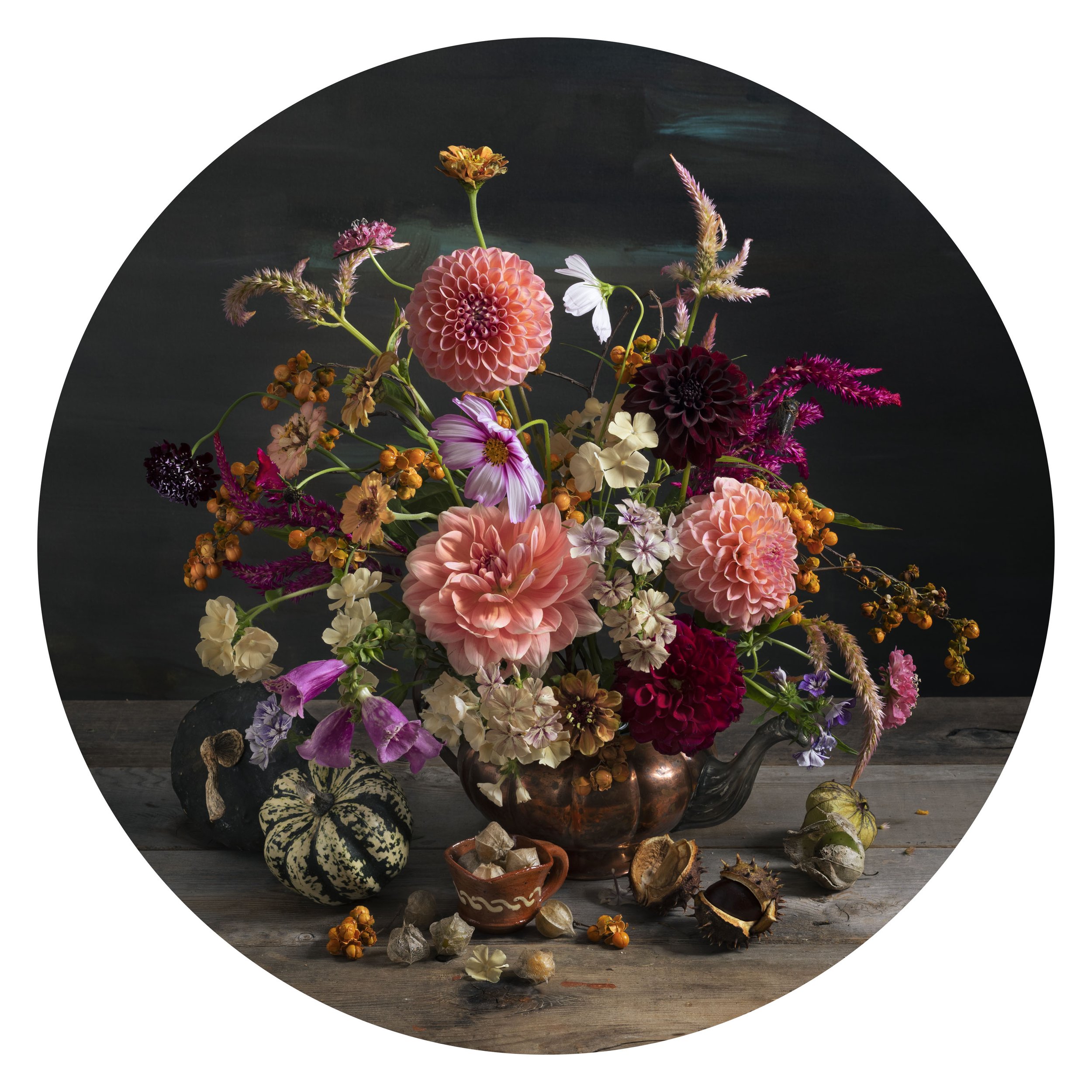
Circle Study #29 Garden Avenue Chestnuts, 2026
Akasha Art Projects is pleased to present Field Work, a CONTACT Photography Festival solo exhibition of work by Canadian artist Kristin Sjaarda
May 5 – 30, 2026
Opening Reception by Invite Only
Artist Talk: May 30, 3 – 5pm
Akasha Art Projects, Toronto
CONTACT Photography Festival
contactphoto.com/festival/2026/open-call/field-work-sjaarda
Field Work is a tribute to the dedication of the Ontario flower farmers who produce the flora that appear in these photographs, as well as to the ecologists who research our environment and its current crisis. With the inclusion of birds and eggs in this collection, borrowed from the ROM, as well as the butterflies, moths, bees and other fauna that complete the arrangements in the manner of 17th-century Northern Renaissance paintings, Kristin creates an ecosystem within the frame of the artwork that reflects the diversity of plant and animal life integral to a healthy and vigorous natural world.
Please contact me to rsvp to the opening reception.
Akimbo Hit List
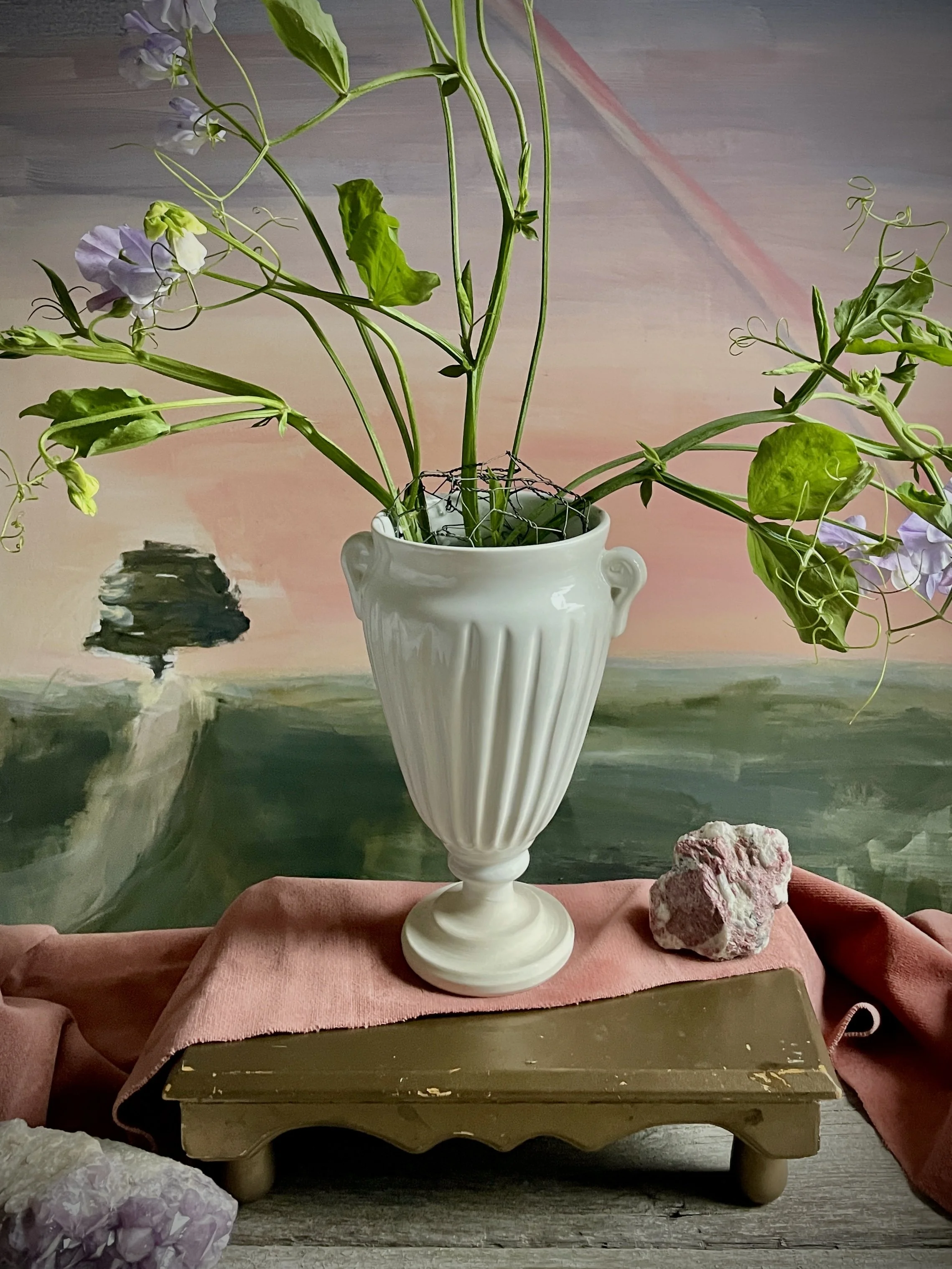
Kristin Sjaarda is a photographic, textile, and ceramics artist based in Toronto. She attended the Colorado Institute of Art in Denver on a full tuition scholarship. Known for lush large-scale still-life images of local flora and fauna from her garden and the urban environment, she collaborates with the Royal Ontario Museum to include real specimens of birds, eggs, and shells in her arrangements. She has also designed silk scarves using her imagery, taught workshops on floral arrangement and natural-light still-life photography, designed and hand-made ceramics for use in her photos, and lectured on the intersection of art and ecology at Sheridan College, the Ontario Science Centre, and the Toronto Botanical Gardens. She has been an artist-in-residence at Kingsbrae Gardens in New Brunswick and at the Royal Hotel in Picton, Ontario. The Art Gallery of Hamilton hosted Sistere, her third solo exhibition, last year. Her work is currently included in the group exhibition Smokestack Published Projects at Smokestack in Hamilton.
Insect Pinning
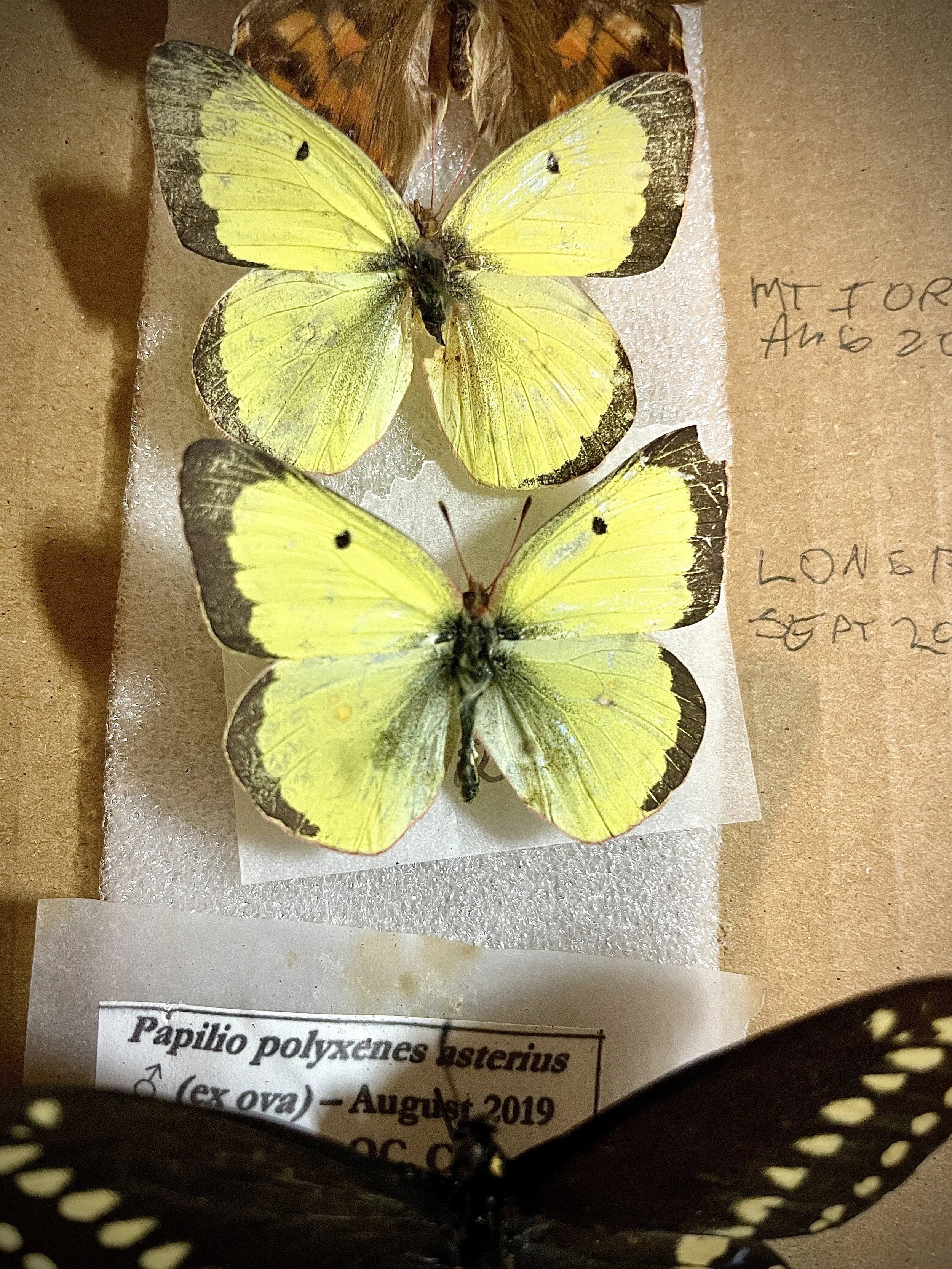
I source specimens from Ontario collectors or find insects on my walks. I learned how to pin through YouTube tutorials. My photos often include insects that are pollinators for the flowers in the depicted arrangements.
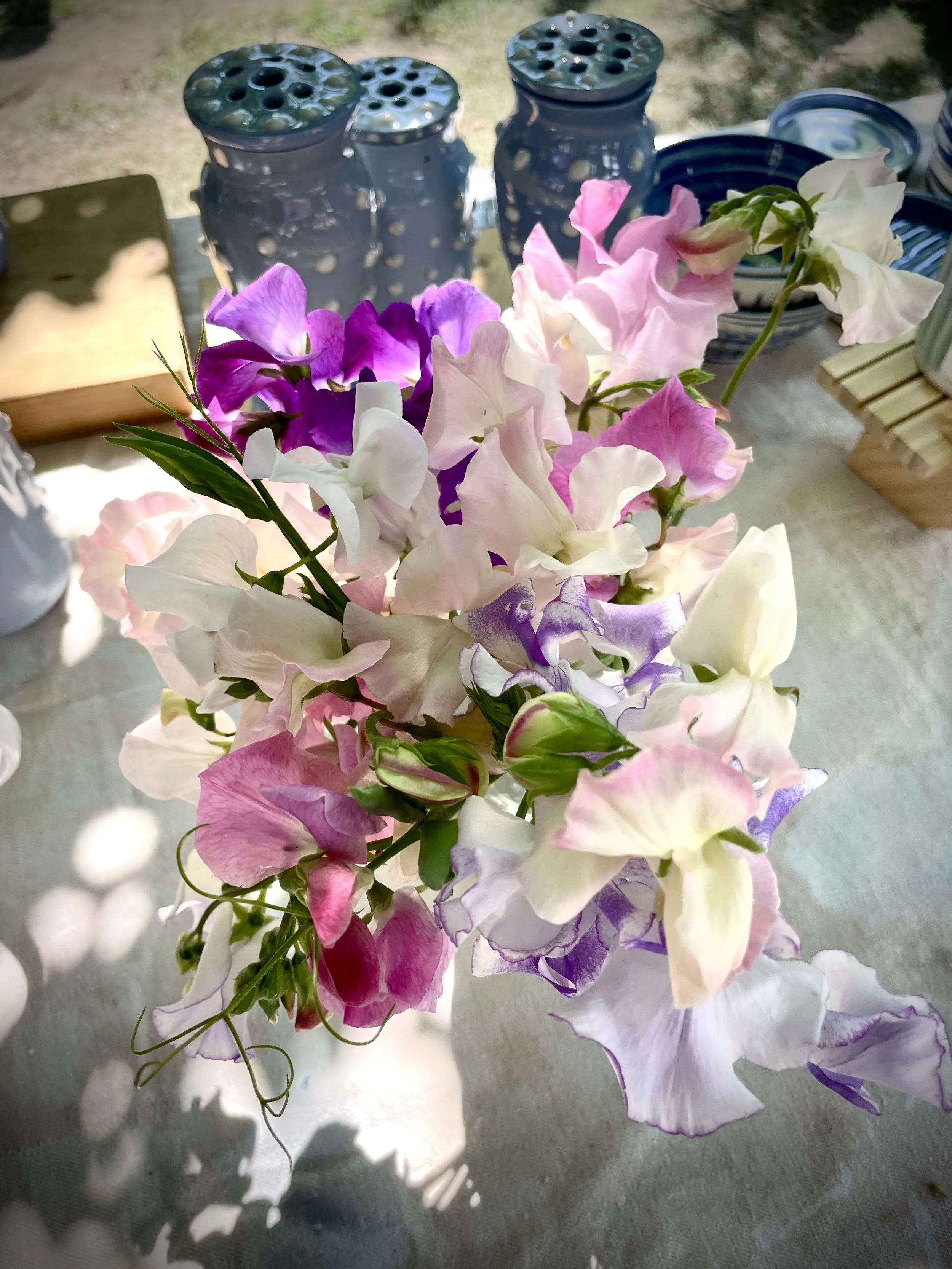
Flower farmers from all over Ontario set up in a park once a month from May to October and feature some of the best freshly picked flowers I’ve ever seen. I really admire the bounty they bring to the city. The flowers in my works currently showing at Smokestack feature flowers from two different Market farmers. It’s an incredibly connected, vibrant community.
The iNaturalist app
I upload pictures taken while hiking and also use it to source specific specimens for shoots. I recently got in touch with an ecologist specializing in mussels and was able to borrow his shell collection for some photos.
Rachel Ruysch (1664-1750)
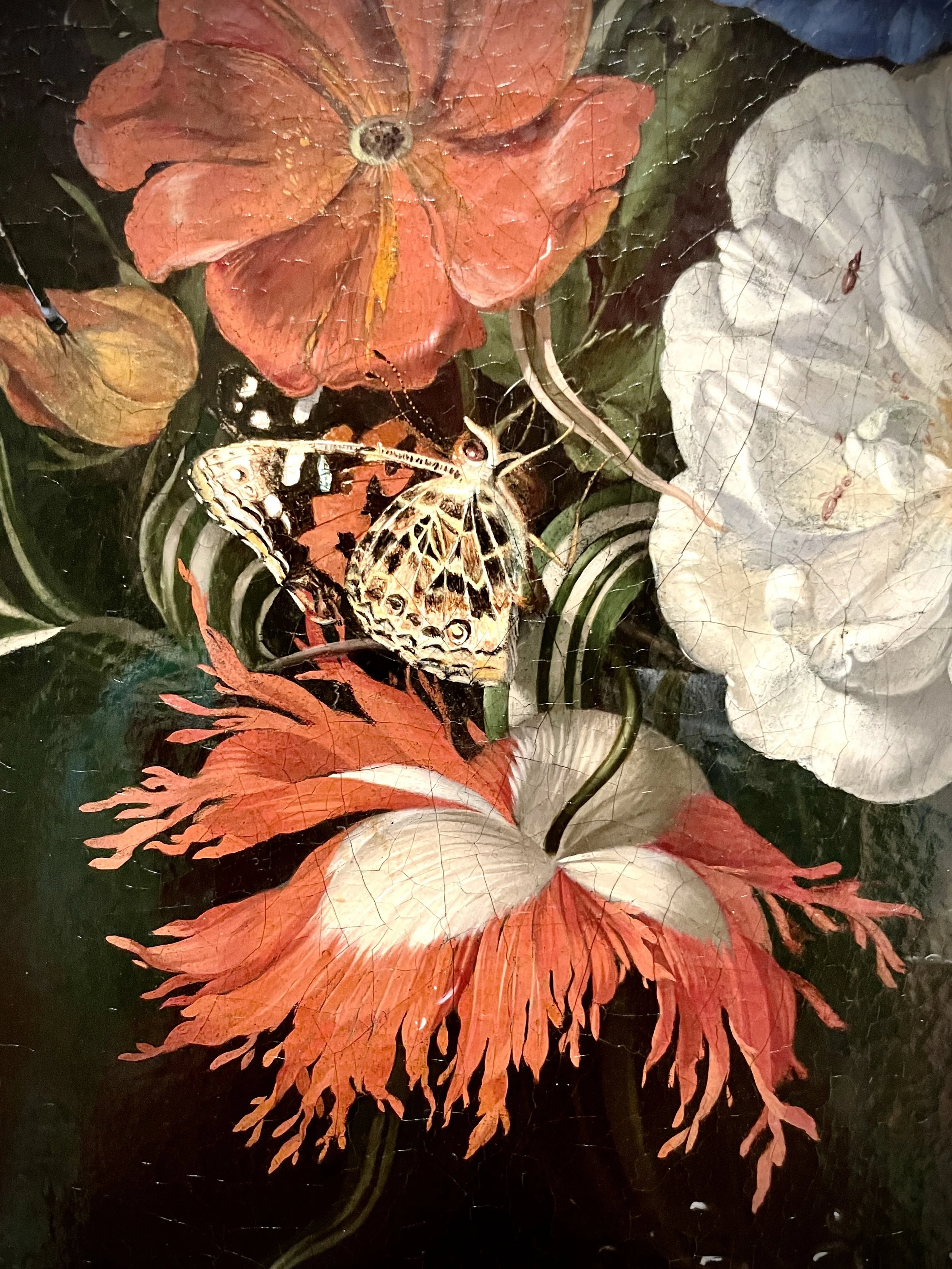
I saw a retrospective of this Dutch painter’s work in Toledo, Ohio this summer. She was an artist, a mother, and a keen observer of the specimens that she used in her art. I especially love her sottobosco (forest floor) paintings where she focuses on fallen leaves, fungus, and the various creatures that feed on the forest detritus.
Pottery
I got a wheel for my birthday, and I make things as often as I can. Lately I have been using my own vessels in my still life arrangements, and have been participating in the Toronto Flower Market, where I sell my ceramics.
Art toronto 2025
This year I had the honor of being represented at the auspicious Art Toronto by two galleries: Smokestack Gallery and Lustre Gallery.
Like the year before, Smokestack Gallery presented a project produced in collaboration with the gallery’s owner and printer, Jonathan. Creating the artwork was done much in the same method that I usually work in. For the image Winter, I started months before the shoot date collecting all the items that are arranged on the table surface in the image. I was not able to find the fresh-water mussel shells on my own so I contacted an ecologist through the iNaturalist app who studies the waterways in Ontario and had a vast collection of shells. The names of these mollusks, so integral to the health of our fresh water as filter feeders, are really fun: alewife floater, purple wartyback, snuffbox, fatmucket, fawnsfoot. Lovely, right? Mussels are dependant on fresh water fish for reproduction and a food source for muskrats. This is why you will also see a fish and a muskrat skull in the arrangement. The perch is from Lake Erie and the little silver box & silver pen knife from my maternal grandmother. The flowers are sourced from a farmer who uses the back and front yards of her neighbors in downtown Toronto to grow the flowers. This image is hyper-local and a reflection of how all of us are tied into the natural systems that flow around us. This project was conceptualized, items collected and arranged by myself in my bedroom studio using only natural light.
Once everything was assembled in my home studio, The image was captured with use of advanced digital imaging technology. I worked with Smokestack’s Digital Printmaker/Co-founder, Jonathan Groeneweg. Using a Phase One IQ4, he was able to take multiple images of the still-life arrangement at minutely varying focus points and “stack” them using digital software. By this technical mastery, all vantage areas of the piece have been captured in hyper clarity.
The background was painted by Nancy Friedland from photographs that I took of local farmland. Printed at a 60 inches on the long side, framed with museum glass at SuperFrame, Winter stole the show at Art Toronto.
In the Lustre booth, the gallery presented a new size for one of my most popular tondos. Circle Study #9 Hellebore & Blue Eggs at 48” across with a beautiful custom brass frame.
This arrangement was made in 2018 in the same studio that I photograph all artwork using natural light, locally grown flowers, chicken eggs sourced from my sister’s farm and little blue and white teacups inherited from my maternal grandmother.
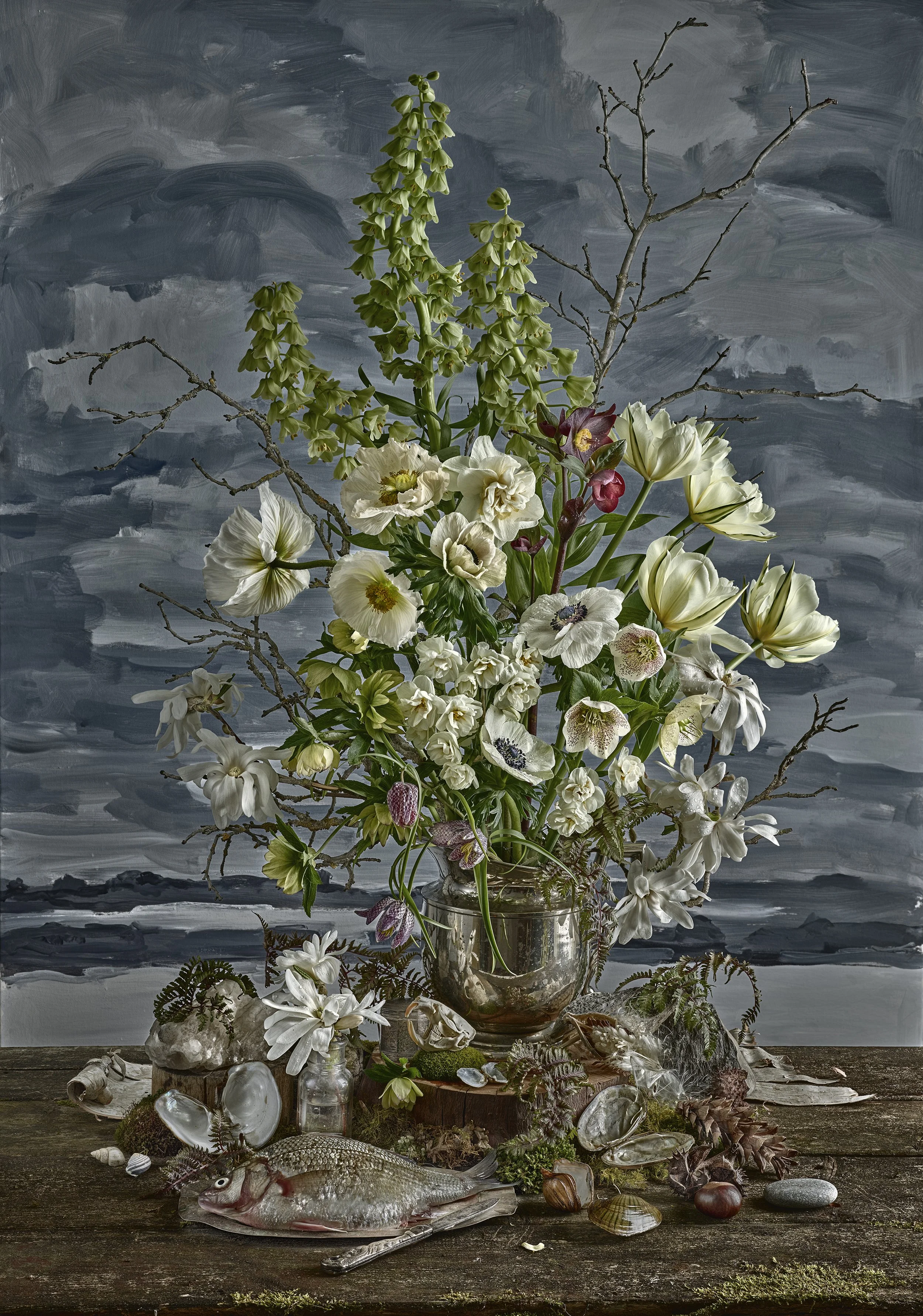
Winter presented by Smokestack Studio a Art Toronto 2025
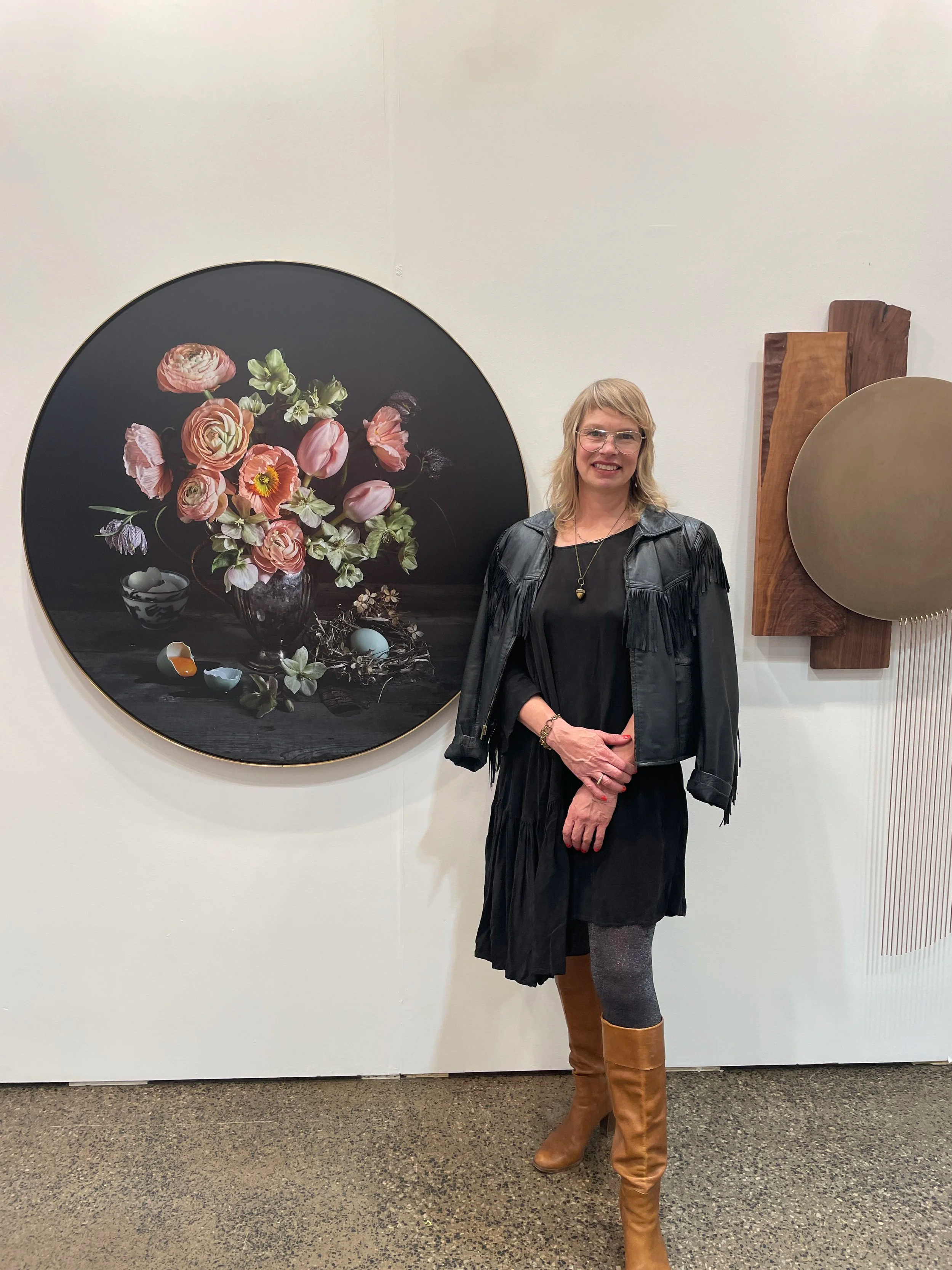
Circle Study #9 Hellebore & Blue Egg presented by Lustre Gallery at Art Toronto 2025
Sistere at the Art Gallery of Hamilton March 2025
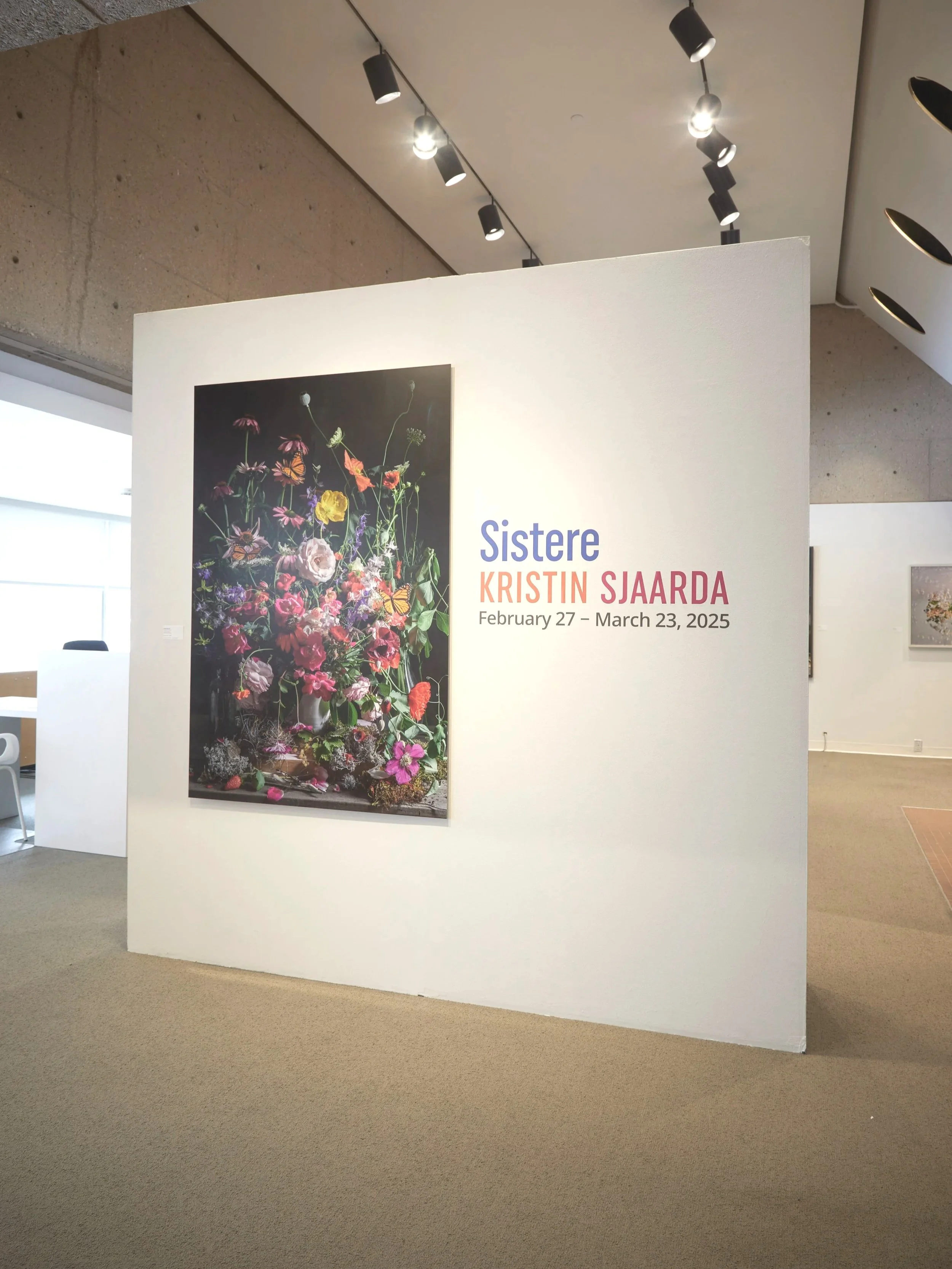
Edwin Farms opens this solo show at the Art Gallery of Hamilton
Kristin Sjaarda’s retrospective exhibition, Sistere explores themes of decay, renewal, and the delicate interplay between the natural world and human intervention. Inspired by the work of Rachel Ruysch, particularly her portrayal of nature's impermanence, Sjaarda’s photographs reflect the fleeting beauty of flora, while confronting contemporary concerns of climate change and environmental degradation.
The title Sistere, drawn from its connection to the word solstice, evokes a sense of pause—a moment to reflect on both personal and ecological time. Sjaarda’s work has evolved from early arrangements directly referencing the classical vanitas, to more recent, site-specific images that capture the essence of singular places and moments.
Her use of mirrors as portals and tools for symmetry underscores her exploration of dualities, both in nature and perception. With each piece, Sjaarda’s work becomes more attuned to the specificities of time and location, offering a deeper engagement with the fleeting beauty of the world around us. In her latest series, Palindromes, she continues to break traditional narrative structures, engaging with the playful complexity of symmetry and reflection.
THE FOREST FLOOR (SOTTOBOSCO) AT SMOKESTACK GALLERY IN HAMILTON

I am very excited to announce “Sottobosco”, my very first Solo Show, at Smokestack Gallery in Hamilton, Ontario.
This is a real milestone for me and a wonderful opportunity to have a full portfolio of my work on display.
It is incredible to see these images in real life rather than on a screen ; in particular there is a special new image ("Verdure") , captured by the amazing PhaseOne IQ4 150mp Camera, and printed at a gigantic 40 by 60 inches! The scale and level of detail are difficult to convey without seeing it in person.
Also on view will be a collection of my recent work from the series Sottobosco. You can read more on the Smokestack Gallery website.
From the exhibition release:
Kristin Sjaarda employs photography as her choice medium through which to investigate the intricacies of the urban ecosystem. Studying the life cycles of flora and fauna around the neighbourhood in Toronto where she lives and works, Sjaarda collects natural specimens directly from the environment to be arranged and captured as still life photographic images. Informed by the still life paintings of artists from the 17th century Dutch Golden Age (the cultural lineage of her personal ancestry) Sjaarda’s work conveys elements of the natural world in dramatic realism.
Sottobosco [The Forest Floor] presents selections of Sjaarda’s more recent works that reflect the influence of one particular 17th century Dutch painter: Rachel Ruysch. Acknowledged as one of the most accomplished still life painters of the era, Ruysch’s contributions to the genre are enveloped in her exemplary demonstration of the Sottobosco tradition. A sub-genre of still life, Sottobosco (also known as ‘forest-floor still life’) defined artworks that represented a significantly more expansive portrayal of the ecosystem where less idyllic elements of the undergrowth appear prominently alongside vibrant florals in full bloom.
The Forest Floor (Sottobosco).
October 14th to November 11th at Smokestack Gallery, 270 Sherman Ave N, Hamilton, ON
Opening on Friday, October 14, from 5-8pm
Curated by Tara Westerman.
ARTIST RESIDENCY IN ST. ANDREW'S, NEW BRUNSWICK
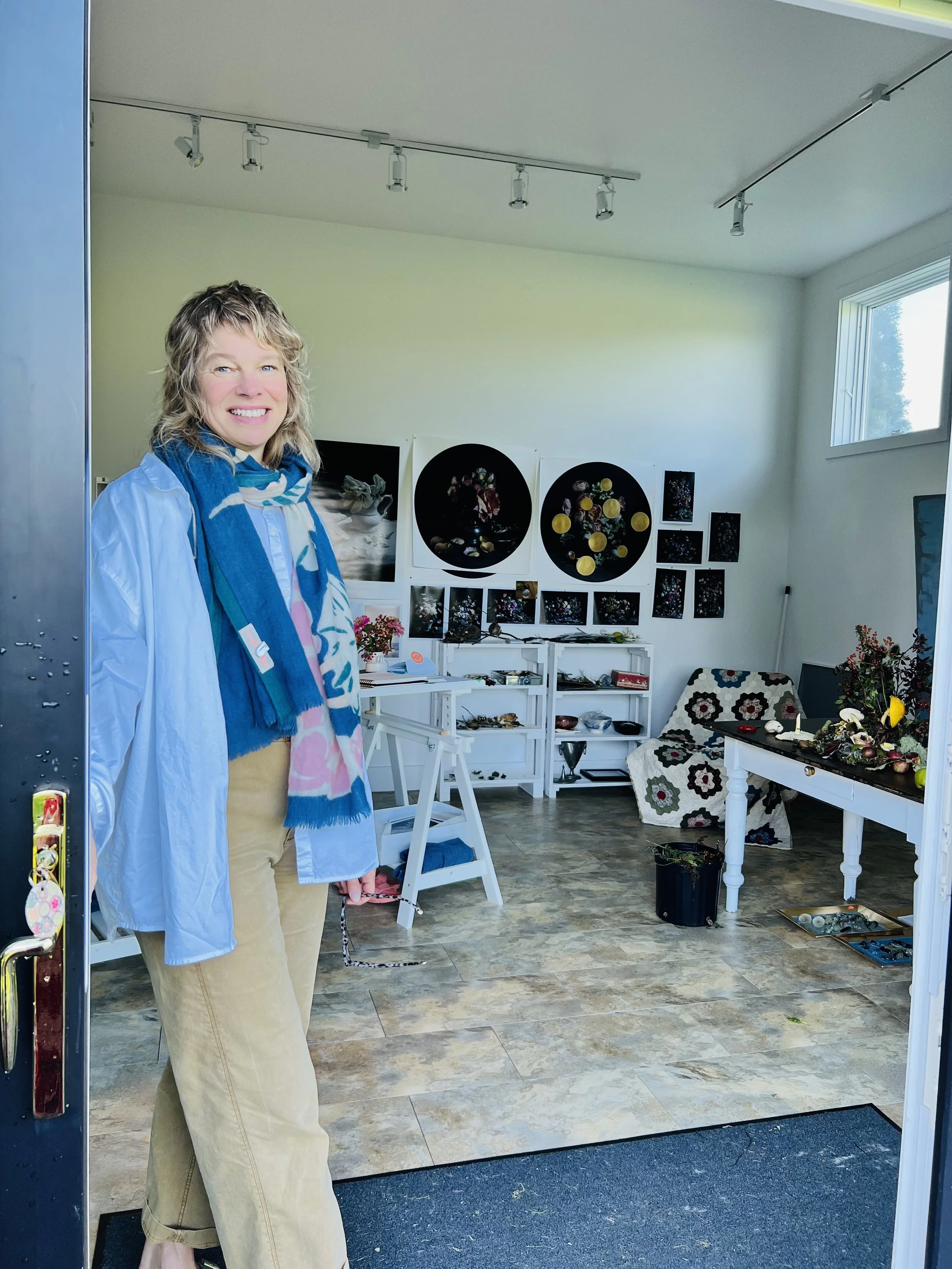
In my studio at Kingsbrae
For the full month of September I was invited to stay in an artist residency. This was an opportunity that was tailor made for my art practice. Kingsbrae is a gardens created by Mrs. L Flemer for the Charlotte County community. Tourists and residents alike walk the gardens at all times of the year enjoying sculpture, a small zoo with alpacas and goats, fountains and of course, flowers. It was from here that I could take my inspiration and material to create new work. I stayed in a large house with 5 other artists from all over the world. I spent my days in my studio following whatever creative whim I had that day. Out of this stay came a multitude of ideas (good and bad) as well as 5 unique arrangements that I photographed with my digital camera. When I was not in the studio I was hiking the local paths or exploring the tides or looking for shells on the beach. St Andrews is on the Bay of Fundy and boasts the biggest tides in the world.
It was an unforgettable and creative time for me and I’m happy to say it was quite productive as well.
Feature in CandyFloss magazine
Written by Alicia Puig of Create Magazine, this feature was an honor to participate in.
1. What are your early memories of art and when did you first become interested in photography?
I think I always knew I would be an artist of some sort. As a kid, I would always be drawing and painting and making things – jewelry, clothing, dollhouses and so on. Often those projects would be executed on the floor beside my bed if I came up with an idea late at night and couldn’t wait till morning to get started. The funny thing is, my studio is now in my bedroom again!
Later, at a local arts centre, I took pottery lessons, and as a teen I taught classes in stained glass and fabric printing. I first did photography in a high school arts class and from there I won an international scholarship to a commercial art school in Denver called the Colorado Institute of Art.
2. The first example of your work I came across was from your Tremblor series. Can you tell us how the concept for this ongoing body of work came about? What is the process of making these images?
The initial impetus for this series was actually just a happy accident. I bumped my camera as I was shooting a still life. I liked what came out and I set out to recreate the look deliberately by using a long exposure and moving the camera while the shutter was open. I started working on this technique right around the time we went into lockdown. The unsettled effect of the double image mirrored my own feelings and resonated with many collectors in the initial days of the pandemic!
3. What are some of the other ideas that you explore through your work in general?
There are three main themes that flow like crosscurrents through my head as I’m working. From a visual point of view I love contrast. I’m very concerned about the exact light levels in the shadow side of the photographs. There needs to be something lurking there, not just a black space. I want the flowers to almost feel carved out of the dark background. In a larger sense, I look for contrast in ideas, too. The flowers are at their peek point of bloom, luscious and ripe. Yet nothing remains in that state and the dead birds, insects, skulls and empty nests serve almost as the flower’s foil.
Every still life set up is also a microcosm. Tulips bloom in the spring when many birds migrate so I will often pair these together in a still life. Later in the season, flowers are accompanied by (found, dead) cicadas that sing when the summer is at it’s hottest. In another image I've paired honey bees and honeycomb with Cosmos, a wonderful flower for pollinators. I live in a large urban setting, not far from downtown Toronto, but even here, nature has an order and a balance between flora and fauna, life and death, beauty and decay.
Finally, as a mother of three, the future of our environment and the effects of climate change are always top of mind. I try with my art practices to be environmentally conscious (all of my art supplies are compostable!) and to shine a light on the incredible diversity, adaptability, and resilience of the natural world.
4. You've said "I am constantly working against time and against the ephemeral quality of my subject matter." In what ways does this support your creative process and in what ways does it make it more challenging?
When there is nothing going on in my garden, when the ground is frozen and covered in snow, I don’t do any photography - I’ve recently started a ceramics practice to fill that gap. When plants are in bloom and the garden is abundant, I’m on flower time. As soon as things get going in the garden I have to structure the rest of my life around the flowers. There are several local flower farmers that I work with to supplement the material in my garden and yard, and if they call me with a particularly ripe bucket of flowers, that is the day that I have to get into the studio. The flowers don’t last very long.
5. Do you have one particular accomplishment as an artist that you're most proud of?
The relationships that I have fostered with the local Toronto flower farmers make me very happy. They are almost all women, and are small business owners in an unpredictable and tough industry. They actively campaign for more environmental practices like working without pesticides , floral foam-free arrangements, and composting. They are working hard to make a better world for their communities and I like to promote them whenever I can. Sometimes I buy their flowers, sometimes I trade and sometimes I get the bug-bitten, fully opened flowers that florists can’t use. I frequently get calls to pick up flowers on very short notice and I am continually surprised by the variety and beauty of the plants that I end up with. It's a real privilege being able to work with them in my arrangements.
6. What was your first experience seeing art in person again after lockdown? What did you see and what was it like?
Here in Toronto, lockdown has been lifted slightly only since last Friday. I haven’t had a chance yet to get out and see art but I am going to see Kareem-Anthony Ferreira at Towards Gallery tonight and I’m excited about that. I am drawn to paintings much more than photographs in a gallery space and I have yet to work out why.
7. We'd love to hear what you're currently working on! Do you have any upcoming projects or exhibitions in the latter half of this year that you'd like to share?
After last year, when so many of my bookings in art fairs, galleries, and residencies were cancelled, I’m finding that making plans for gallery openings just hasn’t been my first priority quite yet. I do have a show planned for December with the painter Nancy Friedland. It’s a show about moths and flowers!


Spotlight at Artfully.ca
I recently joined the online gallery at Artfully.ca. They asked me a few questions about what I do and here is the interview: https://artfully.ca/blogs/news/artist-feature-interview-with-kristin-sjaarda Give it a read!

Eggs, birds from the ROM collection
This past week I returned the eggs that I borrow from the ROM every year. In the collection, behind the scenes at the museum, there is a cupboard that holds hollow eggs that have been donated to the Royal Ontario Museum. Mark Peck, the museum ornithologist, keeps them separate from the rest of the collection because these eggs come in without the pertinent information about where, when and how they were collected. These eggs hold no scientific information for research so they are stored for artistic and educational purposes. Mark will take a carton of these eggs to show kids at a school or visitors to the museum.
I use these eggs in my compositions alongside the flowers that bloom in my garden when birds are building nests and laying eggs. In this way I create a still life environment that mirrors our own climate and location of Southern Ontario.
The birds in these photos are also loaned to me by the ROM. These are birds that have been found by volunteers in downtown Toronto and for the most part, have died in collisions with the tall, glass office bulidings. The ROM stores these birds for research as well as artistic projects. Scientists who want to collect data about migrating birds can use these dead specimens instead of capturing live ones.
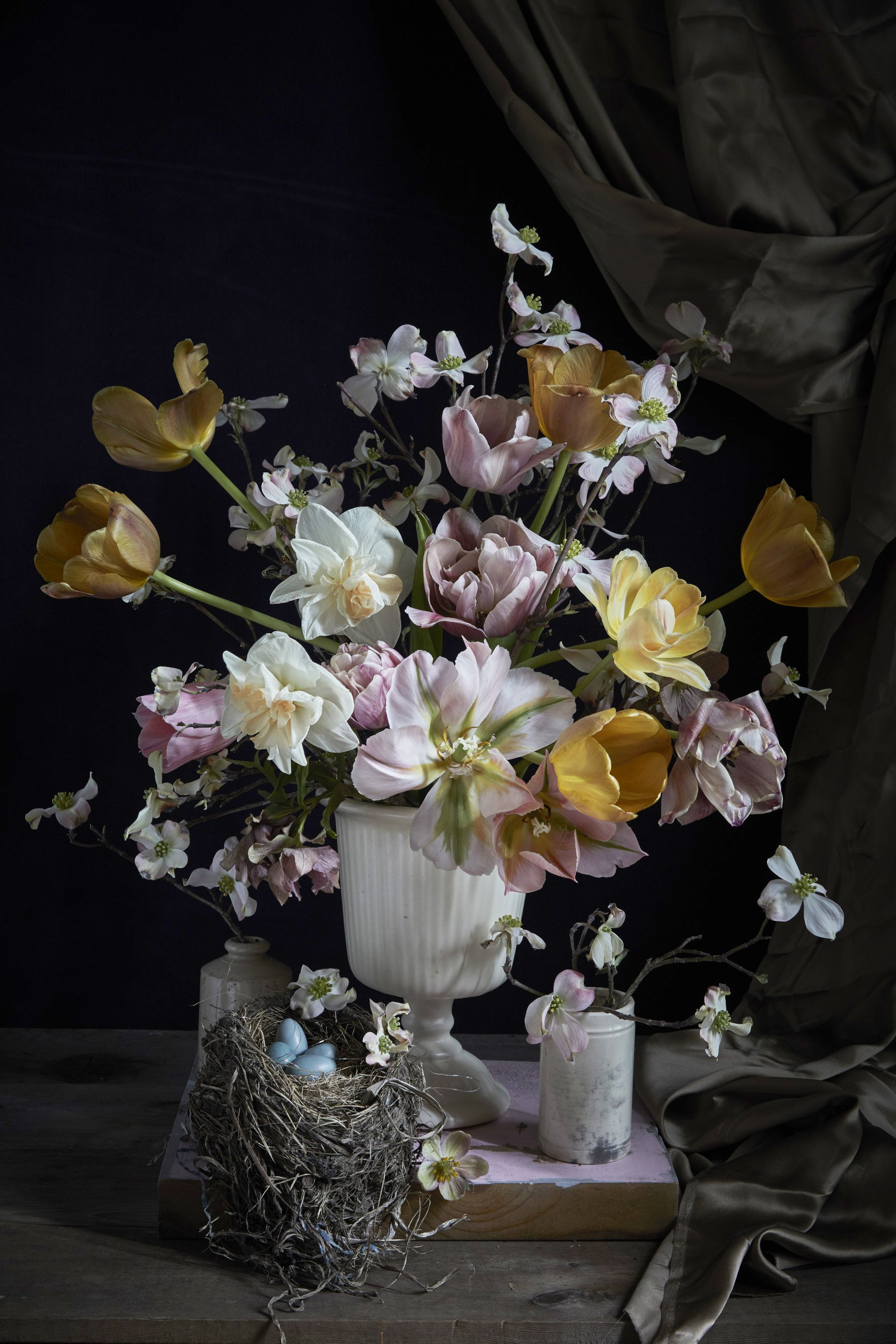
Tulips, Dogwood and Robins Eggs (eggs borrowed from the Royal Ontario Museum)

Eggs in the collection at the ROM

Mark Peck at the ROM shows my kids some of the birds in the collection.

Mark Peck and a hummingbird from the collection at the ROM

The eggs that were lent to me. The names on the carton don’t match the eggs.
Gladstone Gallery in December
Opening night tbd! I just know what images i’m getting ready to show there. One of my favorites Peony and Cedar Waxwing as well as 2 brand new, never been seen before prints in an unusual small size: 20x30 framed and ready for your christmas shopping.

Peonies and Cedar Waxwings. 2018. 42” x 62” | Edition of 5 Framed $4,250 USD

Tulips and Pink Plastic. 2019.20” x 30” Edition of 50 - $450 USD unframed each

Copper Tulips with Moths and Butterflies. 2019. 20” x 30” Edition of 50 - $450 USD unframed each